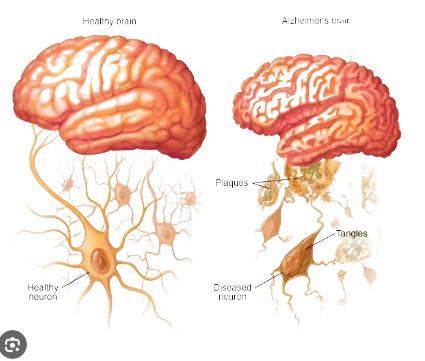
Cause: Alzheimer’s is associated with abnormal buildups of proteins in the brain—amyloid plaques and tau tangles—which damage and kill brain cells.
Symptoms:
Memory loss (especially of recent events)
Confusion and difficulty thinking or concentrating
Trouble with language (finding words, following conversations)
Changes in mood and behavior
Difficulty with familiar tasks and decision-making
Stages: The disease progresses from mild (forgetfulness) to moderate (confusion, trouble with daily tasks) to severe (inability to communicate or care for oneself).
Who is affected: Most people with Alzheimer’s are 65 or older, but it can also affect younger individuals (known as early-onset Alzheimer’s).
Treatment: There is no cure, but some medications and therapies can help manage symptoms or slow progression for a time. Supportive care and lifestyle adjustments also help.
Prevention: There’s no guaranteed way to prevent it, but a healthy lifestyle—regular exercise, a balanced diet, mental stimulation, and social engagement—may reduce the risk.